
Lead Scoring for Startups: A Practical Cheat Sheet to Prioritize Your Hottest Prospects
PART 9 OF 12 | THE STARTUP MARKETING PLAY BOOK | BLOG POST

The Lead Quality Problem
Ask any sales team at an early-stage company what their biggest frustration is with marketing, and you'll hear some version of the same answer: the leads aren't good.
Ask the marketing team, and you'll hear the inverse: they're generating leads, and the leads are engaging, so why isn't sales doing anything with them?
Both sides are usually right in some respects. The real problem tends to be a lack of a system for distinguishing between leads who are genuinely warming up and those who are just sitting in a database. Without that system, every lead looks the same, and sales end up wasting time on contacts who aren't remotely ready to buy while missing the ones who are.
Lead scoring is the answer to this common problem. It's not complicated technology; rather, it's a set of automated rules in your CRM that assign point values to specific behaviors, so the hottest leads naturally surface at the top of the list. Done well, it transforms a chaotic database into a prioritized, actionable pipeline.
How Lead Scoring Works
The core concept is simple: every action a lead takes that signals buying intent earns them points. Every action that signals they're cooling off or aren't a good fit for the product or service deducts points. When a lead reaches a defined threshold (typically 100 points), your CRM automatically notifies your sales team that it's time to reach out.
The behaviors you’ll want to track fall into three categories:
Implicit scoring: What the lead is doing on your website and with your content. These are the strongest signals because they're active behaviors the lead is taking without being asked.
Engagement scoring: How the lead is interacting with your emails, webinars, socials, and other types of content. These are slightly weaker than implicit signals, but are still important in aggregate.
Explicit scoring: The data the lead has provided about themselves through forms. This helps you separate leads that fit your ideal customer profile from those that don't.
Category 1: Implicit Scoring (Website Behavior)
These are the actions that happen on your website. They're the most reliable signals because they reflect active choices the lead is making, such as visiting your pricing page, downloading a case study, or watching your demo. No one does those things by accident.
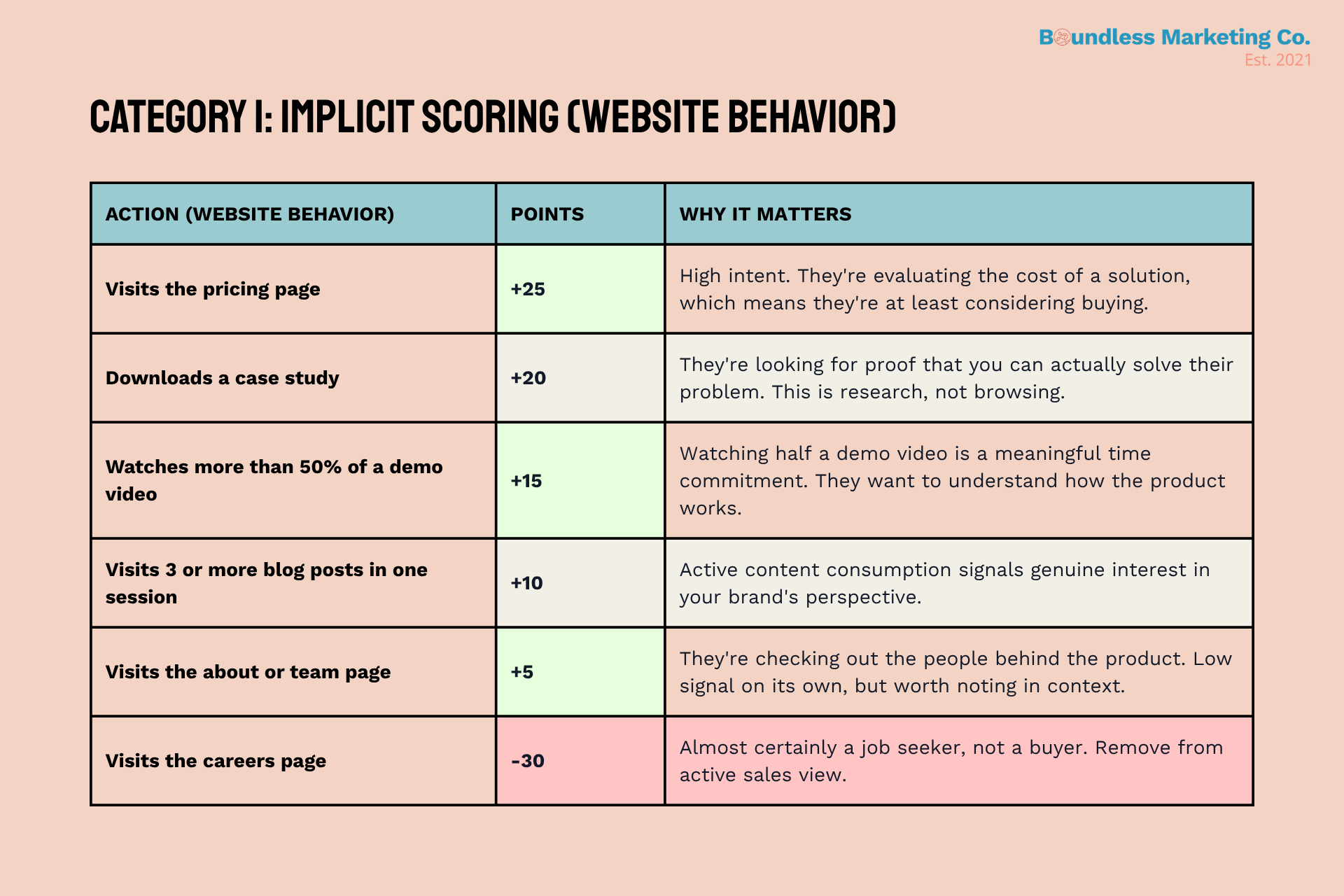
The pricing page is the single highest-intent page on most websites. A visit there means a lead is actively evaluating the cost of your solution. If you're not tracking pricing page visits and assigning them significant points, you're missing one of the clearest buying signals you have.
Category 2: Engagement Scoring (Email and Social)
The pricing page is the single highest-intent page on most websites. A visit there means a lead is actively evaluating the cost of your solution. If you're not tracking pricing page visits and assigning them significant points, you're missing one of the clearest buying signals you have.
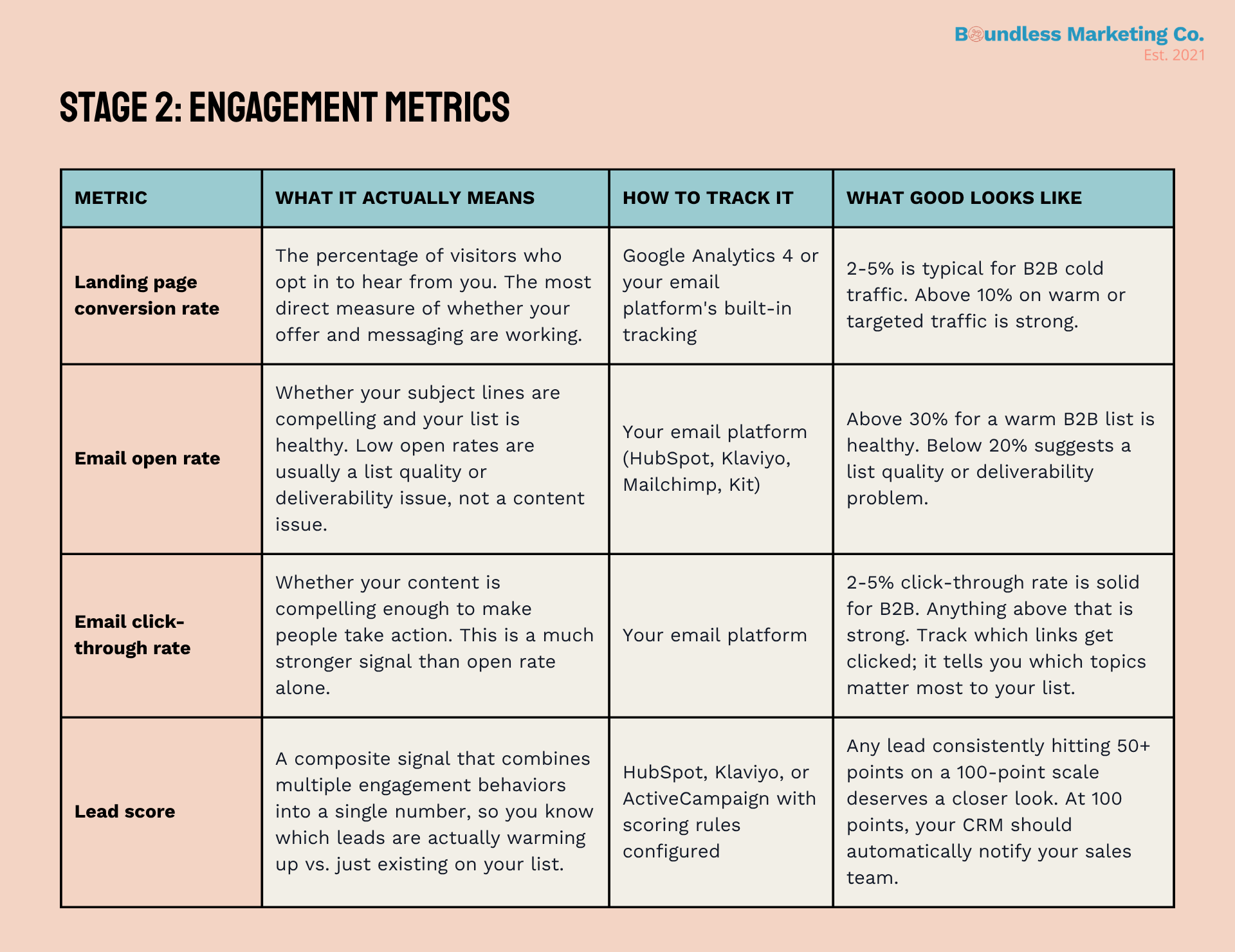
The most important element of engagement scoring that most teams overlook is the decay component. Without automatic point deductions for inactivity, your hot leads list gradually fills up with contacts who engaged six months ago and have been completely silent since. Decay rules keep the list honest.
Category 3: Explicit Scoring (Who They Are)
Explicit data is what a lead tells you about themselves when they fill out a form. Unlike behavioral data, which you're collecting passively, explicit data is what the lead actively chooses to share. It tells you whether this person actually fits your ideal customer profile.
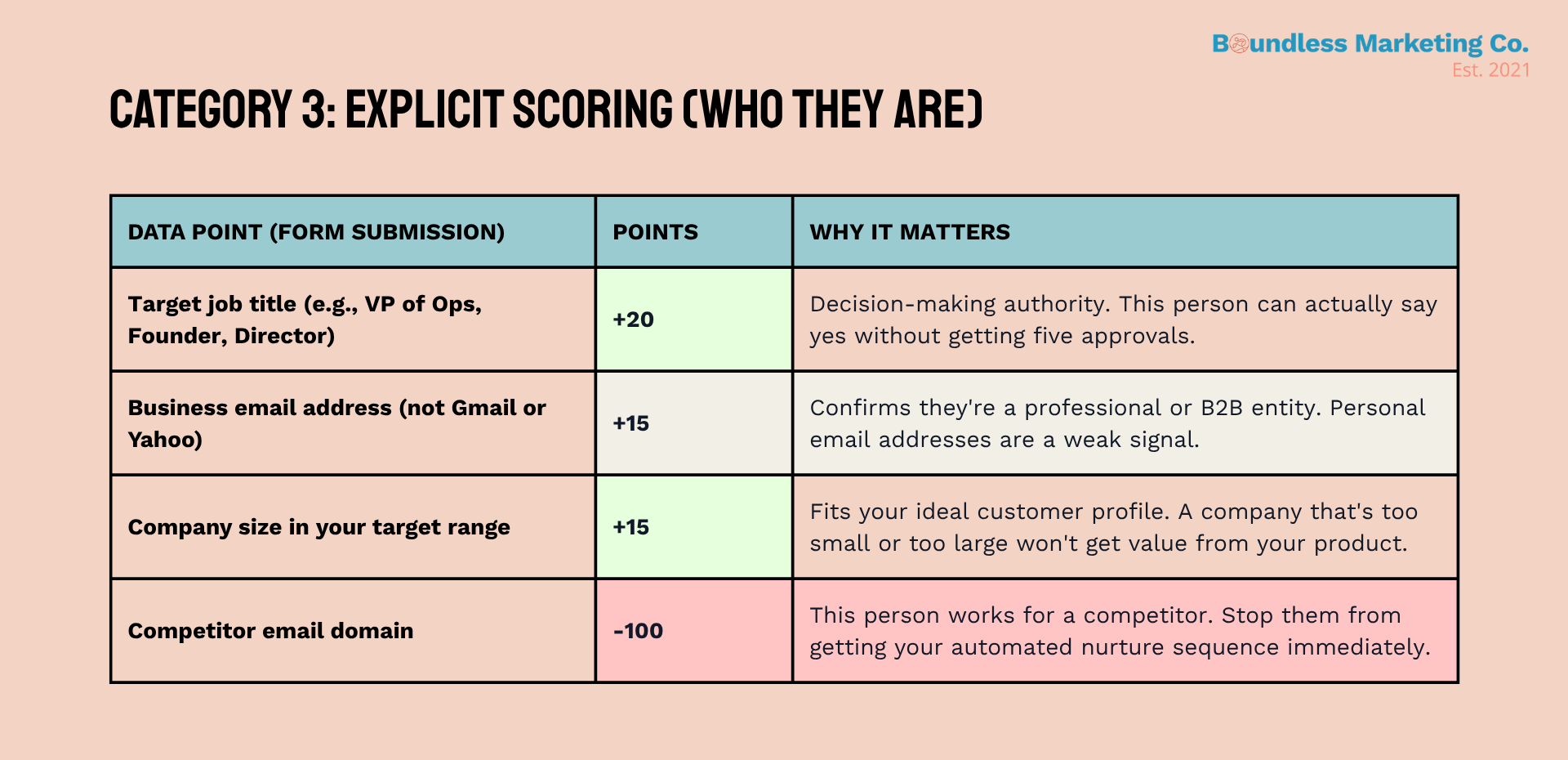
The competitor email domain rule deserves special attention. If you're running automated nurture sequences and a lead from a competing company is receiving them, you're essentially giving your competitor a tour of your messaging strategy. A -100-point deduction and an immediate suppress rule stop that from happening.
Setting Your Threshold and Tiering Your Leads
The 100-point threshold is a starting point, not a fixed rule. What the threshold should actually be depends on your sales cycle, your team's capacity, and what your data shows about the behaviors that actually precede a purchase. Here's a tiered framework to work from:
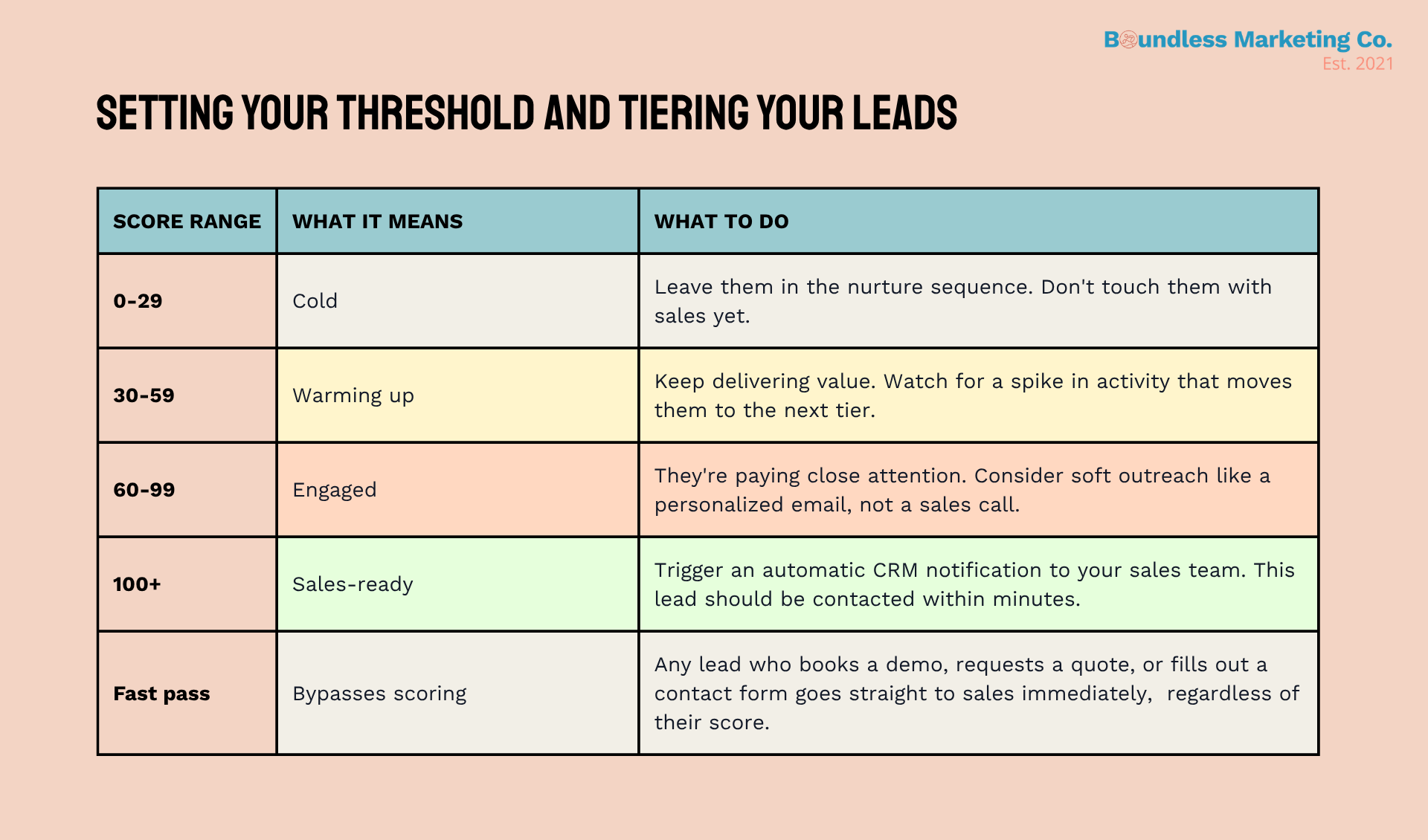
The fast pass rule is worth repeating because it's the most commonly missed piece of a lead scoring implementation. If someone fills out a demo request form, they're telling you they're ready for a conversation right now. Making them wait while the automation processes their score is a mistake. Build a rule that routes any form submission with an explicit sales intent directly to your sales team within five minutes, regardless of score.
Building Your Model in Practice
Here's the order in which to actually set this up, assuming you're starting from scratch:
Define your ideal customer profile first. Before you assign a single point value, know who you're trying to reach: job title, company size, industry, and any other factors that predict whether someone will get value from your product. Your explicit scoring rules flow directly from this.
Identify the five behaviors that most reliably predict purchase intent for your specific product or service. Talk to your best existing customers and ask them: “What were you doing in the weeks before you decided to buy?” Their answers become your highest-point implicit behaviors.
Set up tracking for the implicit behaviors in your CRM. Most tools have built-in lead-scoring modules that can automatically trigger based on page visits, email clicks, and form submissions.
Add the engagement scoring rules. Most email platforms make this straightforward: open equals points, click equals more points, unsubscribe equals reset.
Configure your explicit scoring based on the data you're collecting in forms. Keep your forms short; you can't score data you never collect, but a 10-field form will dramatically reduce your conversion rate.
Set up the decay rules. Skipping this step will lead to future regret. Schedule automated point deductions for inactivity from day one.
Configure the sales notification. When a lead hits 100 points, your CRM should automatically create a task for a salesperson and notify them via email or Slack. The notification should include the lead's recent activity so the salesperson knows exactly what they've been doing before picking up the phone.
Calibrating Your Model Over Time
Your first lead scoring model won't be perfect. But that’s OK–the goal is to get something running so you can start collecting data. Here's how to diagnose and fix the three most common problems with lead scoring systems.
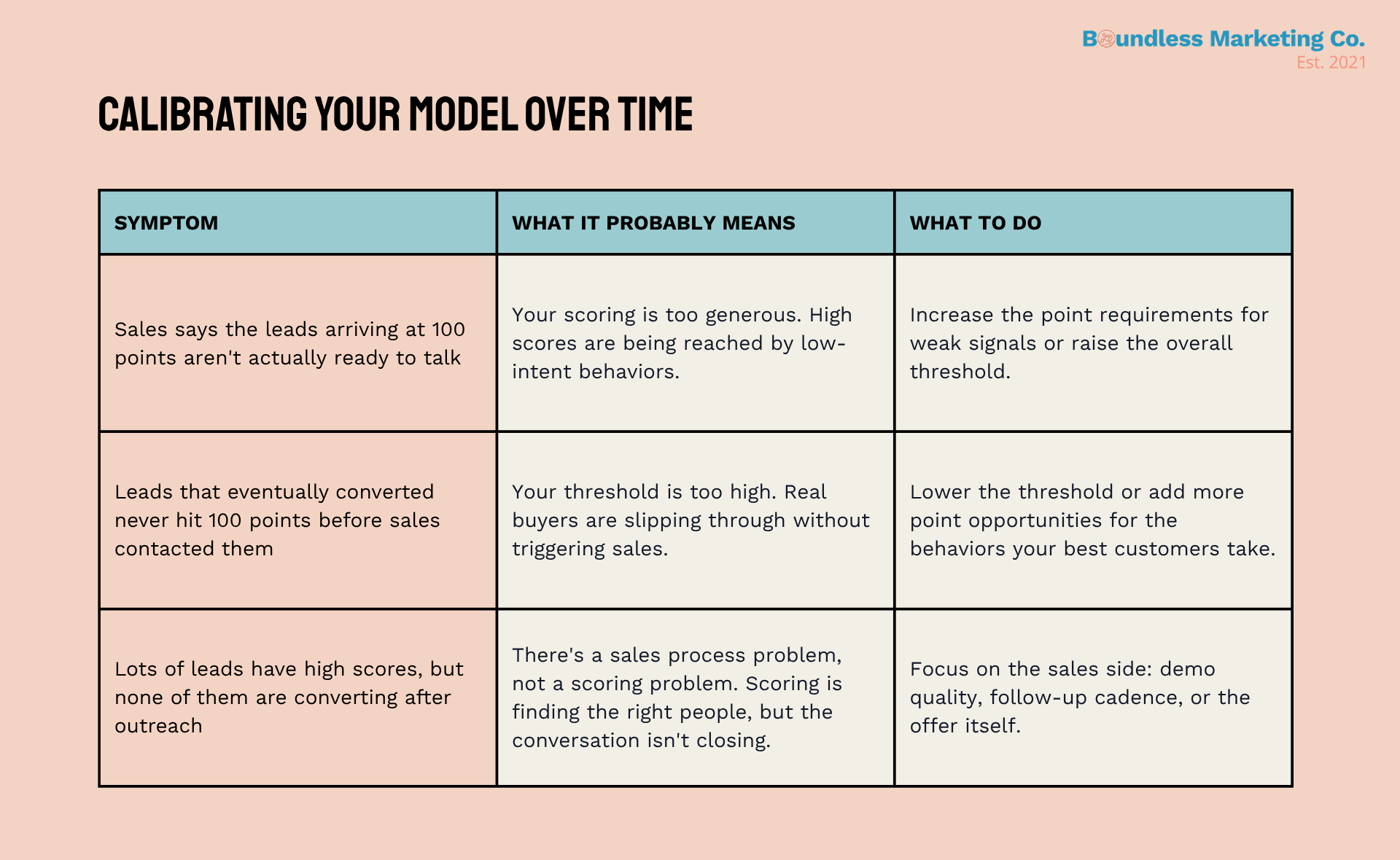
The most useful calibration habit is a monthly sales-marketing alignment check. Sit down together and ask: of the leads that hit 100 points this month, how many were actually ready to talk? If sales consistently say the leads are too cold, your scoring is too generous. If they're saying they wish they'd been alerted earlier, your threshold is too high. Adjust accordingly and revisit again next month.
What Lead Scoring Won't Fix
It's worth being clear about the limits of lead scoring because it's sometimes oversold as a cure-all
Lead scoring won't fix a traffic quality problem. If the leads entering your funnel are the wrong people to begin with, their scores will never reflect genuine purchase intent, no matter how well your model is built. Scoring is a filter for leads that are already in the funnel. It's not a substitute for targeting the right audience at the top.
Lead scoring also won't fix a sales process problem. If leads are reaching 100 points and sales are contacting them but not converting them, the problem is likely in the sales conversation, the product demo, or the pricing structure, not in the scoring model. Don't blame the model for problems that live downstream.
What lead scoring does well is help your team focus. It reduces the time spent on leads who aren't ready, speeds up outreach to leads who are, and creates a shared language between marketing and sales for discussing lead quality. That's a significant win for any early-stage team that doesn't have the bandwidth to treat every lead with equal attention.
The Bottom Line
Lead scoring doesn't have to be complicated to be effective. A simple model with 10 to 15 rules, properly configured decay, and a clear handoff threshold will outperform a spreadsheet-based approach any day. And unlike many marketing tools, it gets better over time.
Up Next: Part 9 goes deeper on lead scoring specifically -- how to build a model from scratch, how to set the right sales-ready threshold, and how to make sure your hot leads list actually stays hot.
About This Series: This post is part of The Startup Marketing Playbook, a 12-part newsletter and blog series for tech and SaaS founders. Each installment covers one core concept in depth, with actionable frameworks you can apply immediately.